


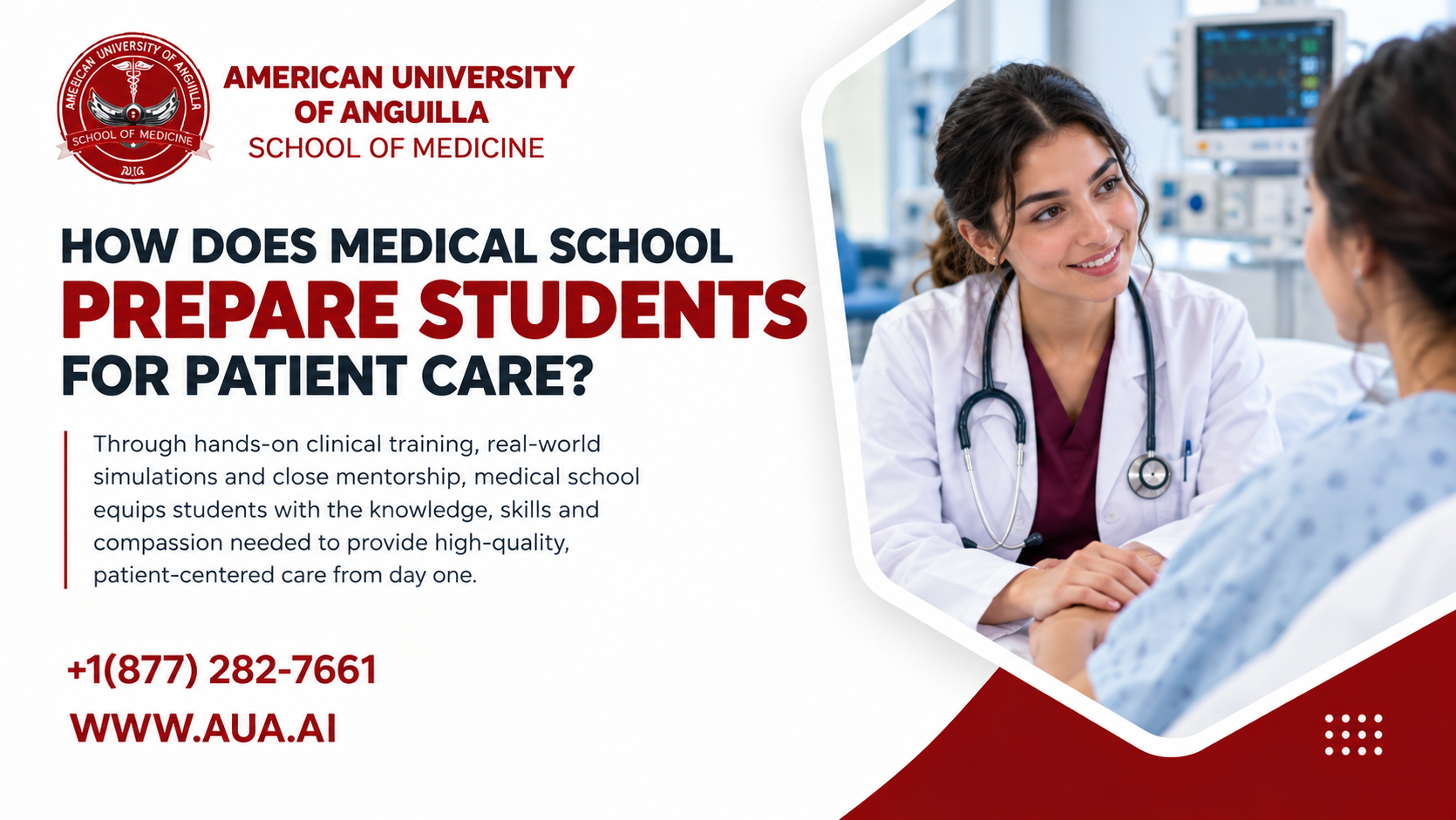
Becoming a doctor involves more than memorizing medical facts. Future physicians must learn to listen carefully, communicate clearly, evaluate information, and understand each patient’s needs. These skills are important for building trust and supporting safe, effective healthcare.
Medical education combines scientific knowledge with the development of clinical judgment and professional behavior. At American University of Anguilla (AUA), the MD curriculum includes clinical skills and clinical training to help students prepare for patient-centered medical practice. Learning to approach patients with respect, empathy, and professionalism is an important part of becoming a responsible physician.


